
Melanie Tomlinson
The inspiration behind Blackbird came from a deeply personal place—my experience of being childless, not by choice. For a long time, I hadn’t wanted to express this through my art, but that changed recently. In the summer of 2024, I found a dead blackbird in my garden, and I was struck by its fragile beauty. I decided to preserve its bones, finding in that poignant ending a powerful metaphor for my own feelings of loss - not just about my personal situation, but also about environmental decline and ecological grief. For me the two are intertwined.
The blackbird became a lens through which I could explore and express these complex emotions. Preserving the bones myself was crucial. After burying the bird’s body, I waited several months before carefully extracting and cleaning the skeleton using proper methods. This intimate process deepened my connection to the piece, embedding my own story within its structure. The piece also reflects my interest in ‘edgelands’, being between two worlds, being on the edge, dealing with life and death, and experiencing the associated shades of light and dark emotions.
My practice involves the use of different materials and making processes and metal is a material I’m very familiar with. I have been hand-printing my own illustrations onto metal for decades. More recently, I have explored etching these illustrations directly into metal surfaces. For this piece, the bird’s body is crafted from etched brass, which I also hand-printed with delicate watercolour patterns. The imagery etched into the brass includes a blackbird foetus, skeletons of various creatures, and a phoenix rising from the flames—a symbol of rage and rebirth.
The cross-stitched patterns represent flora and fauna, but they are deliberately subtle and abstract. I wanted the imagery to seem as if it is disintegrating, offering only a suggestion of what the forms represent. Some parts of the images are intentionally lost or obscured, reinforcing the themes of fragility, loss, and decay woven throughout the work.
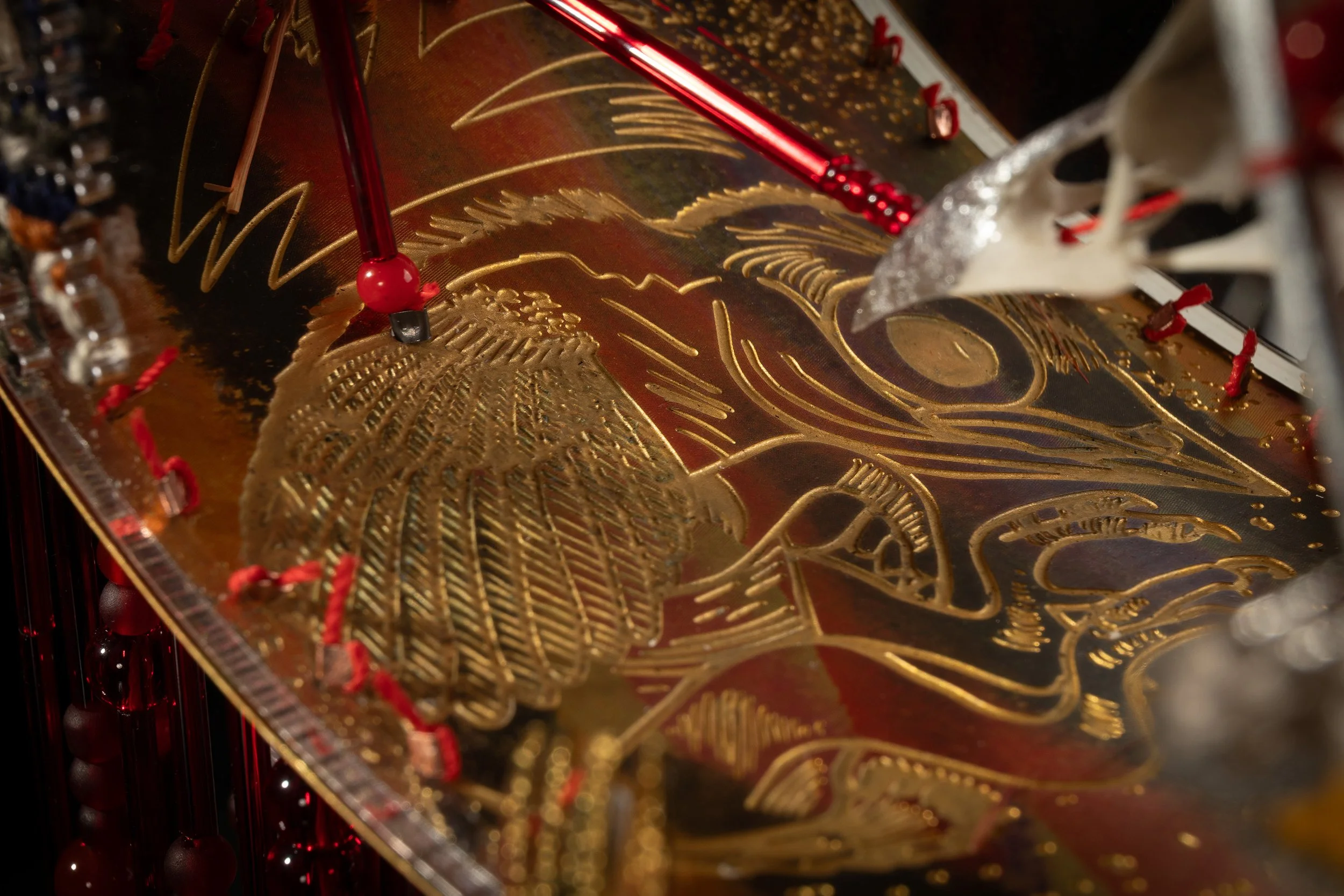
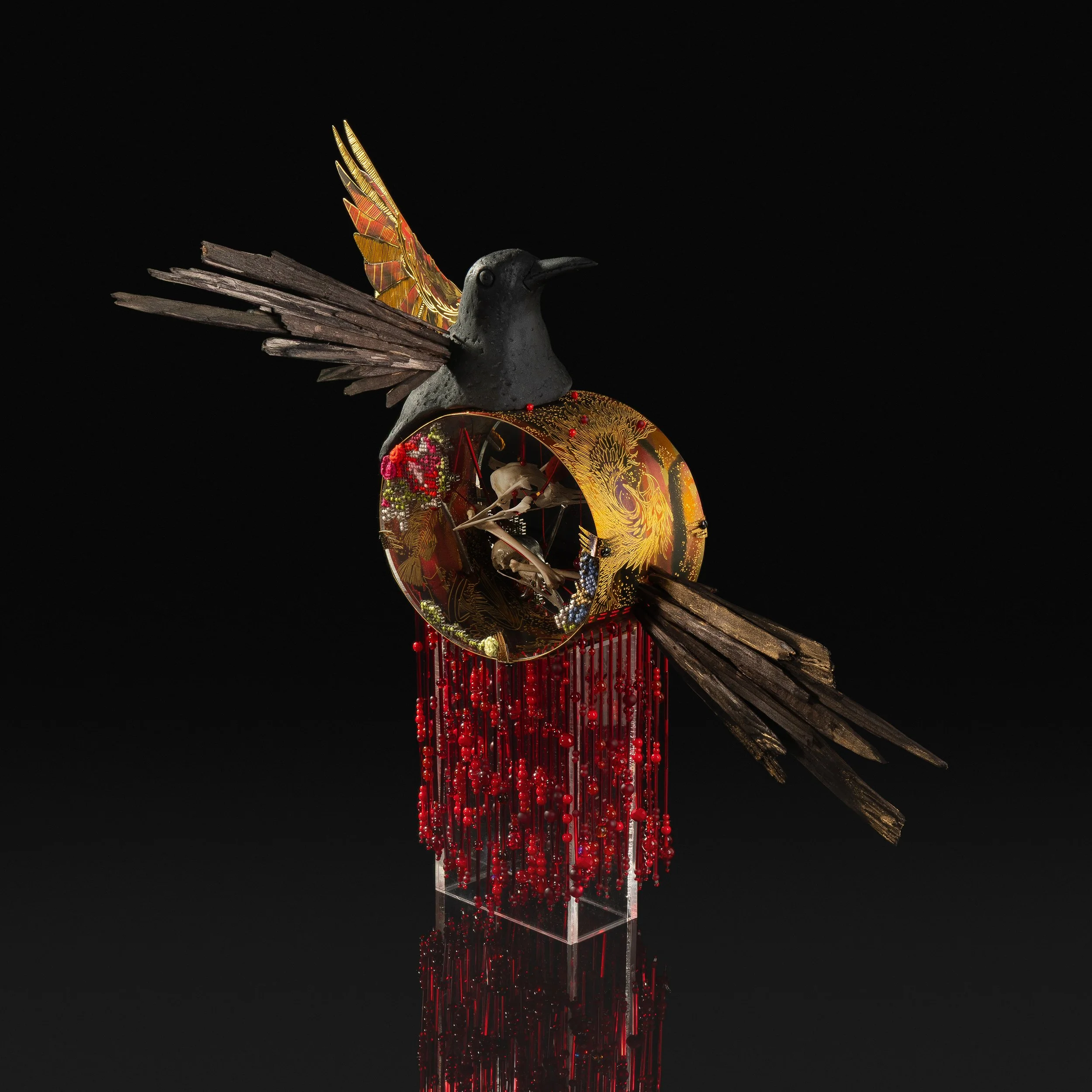
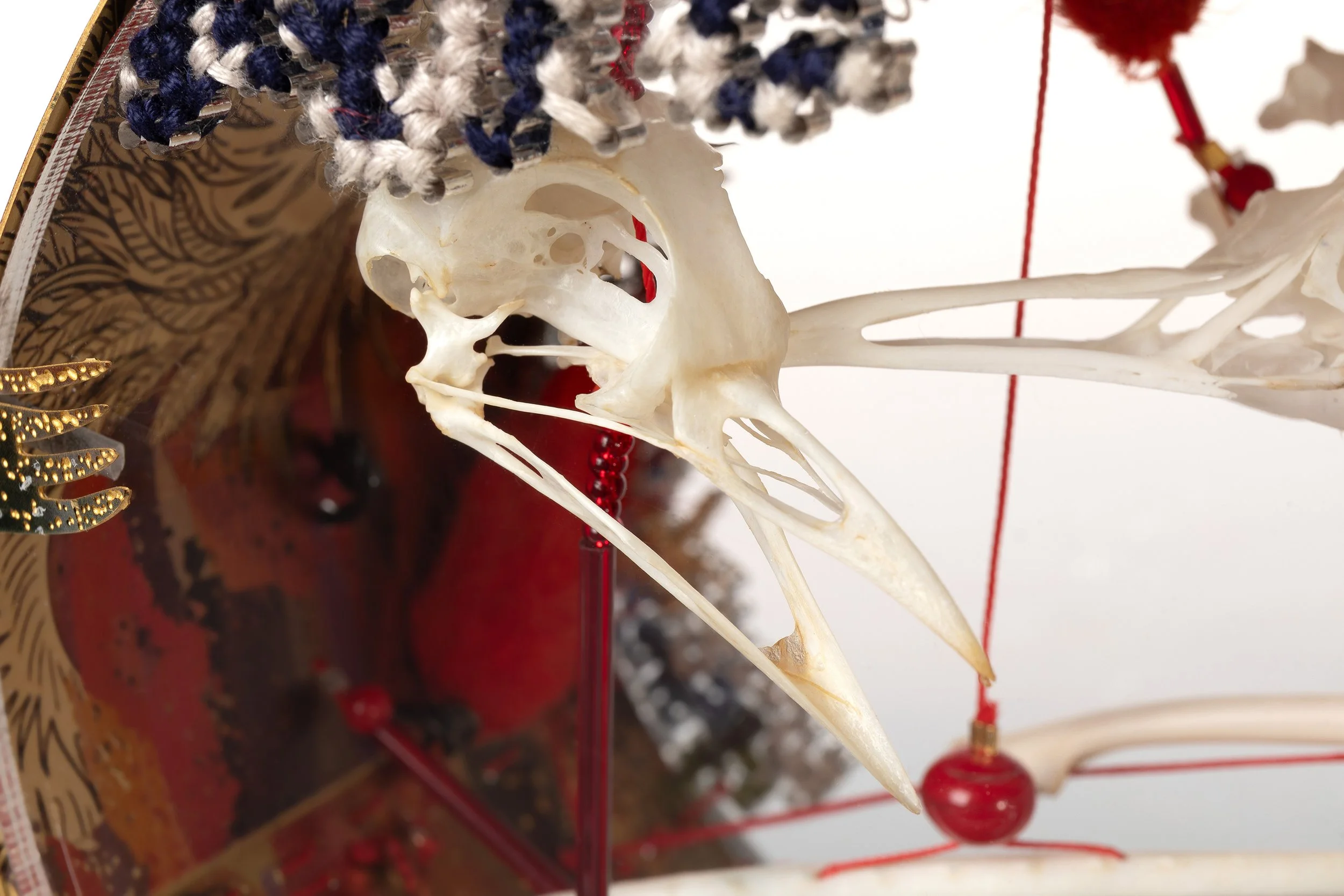
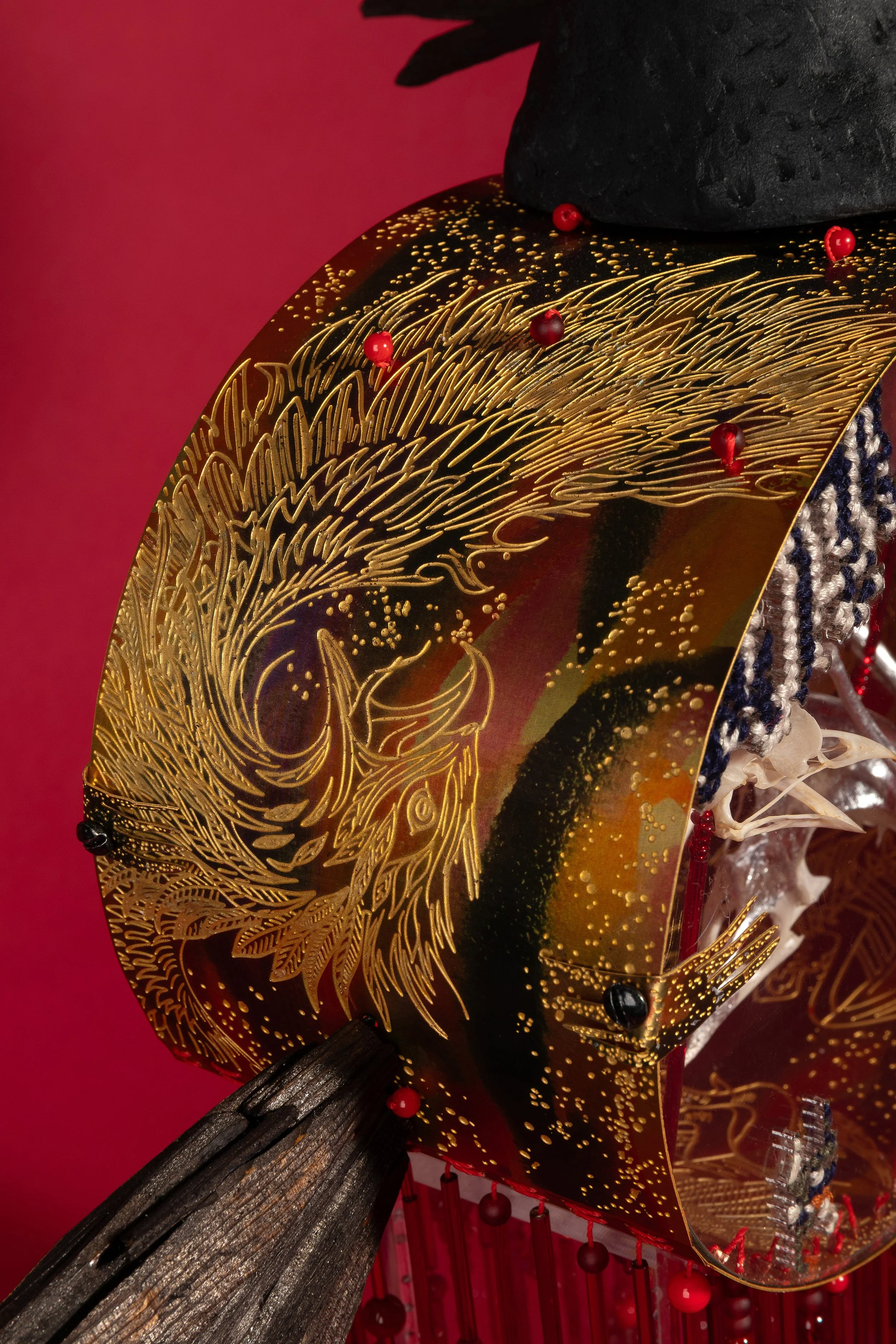
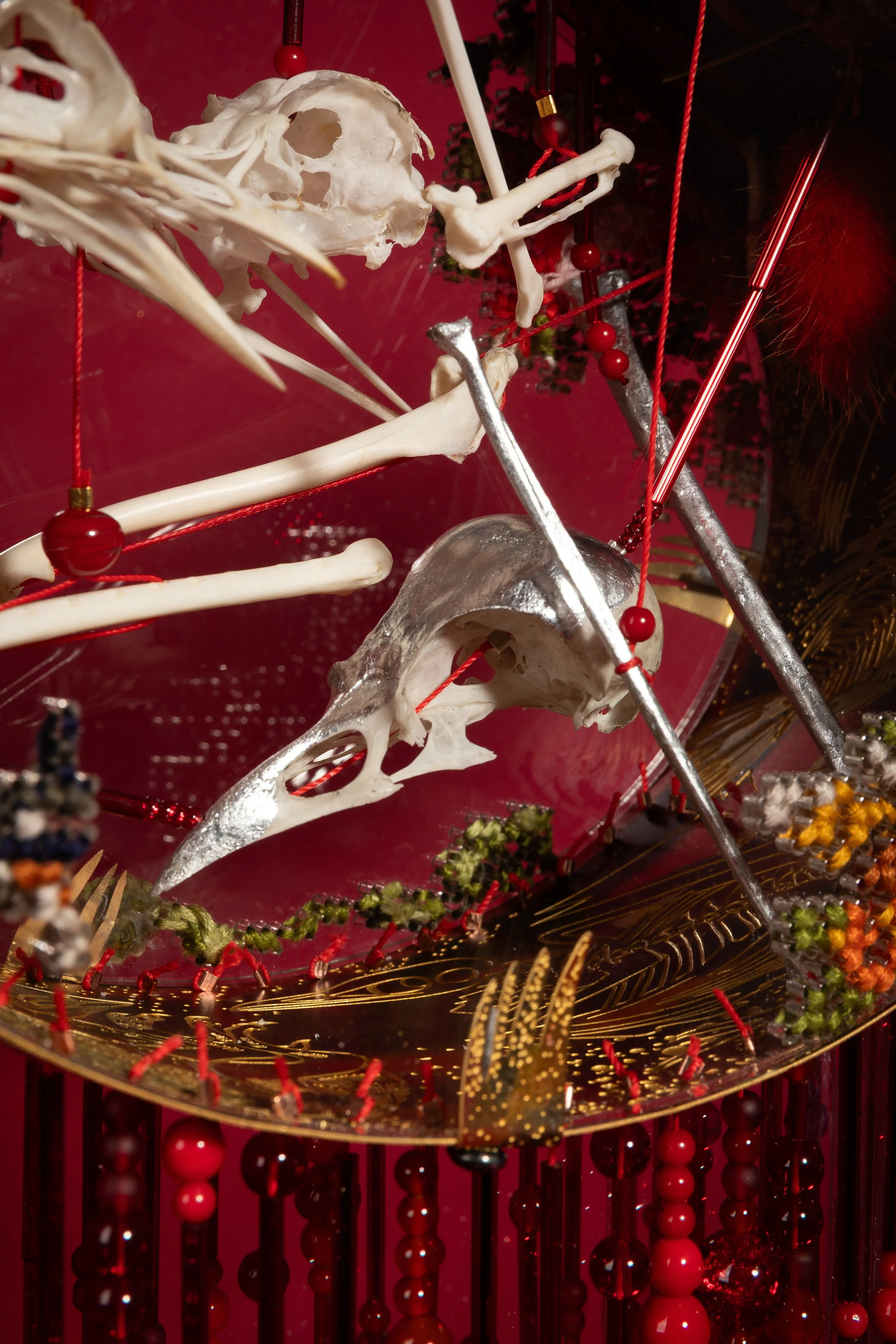
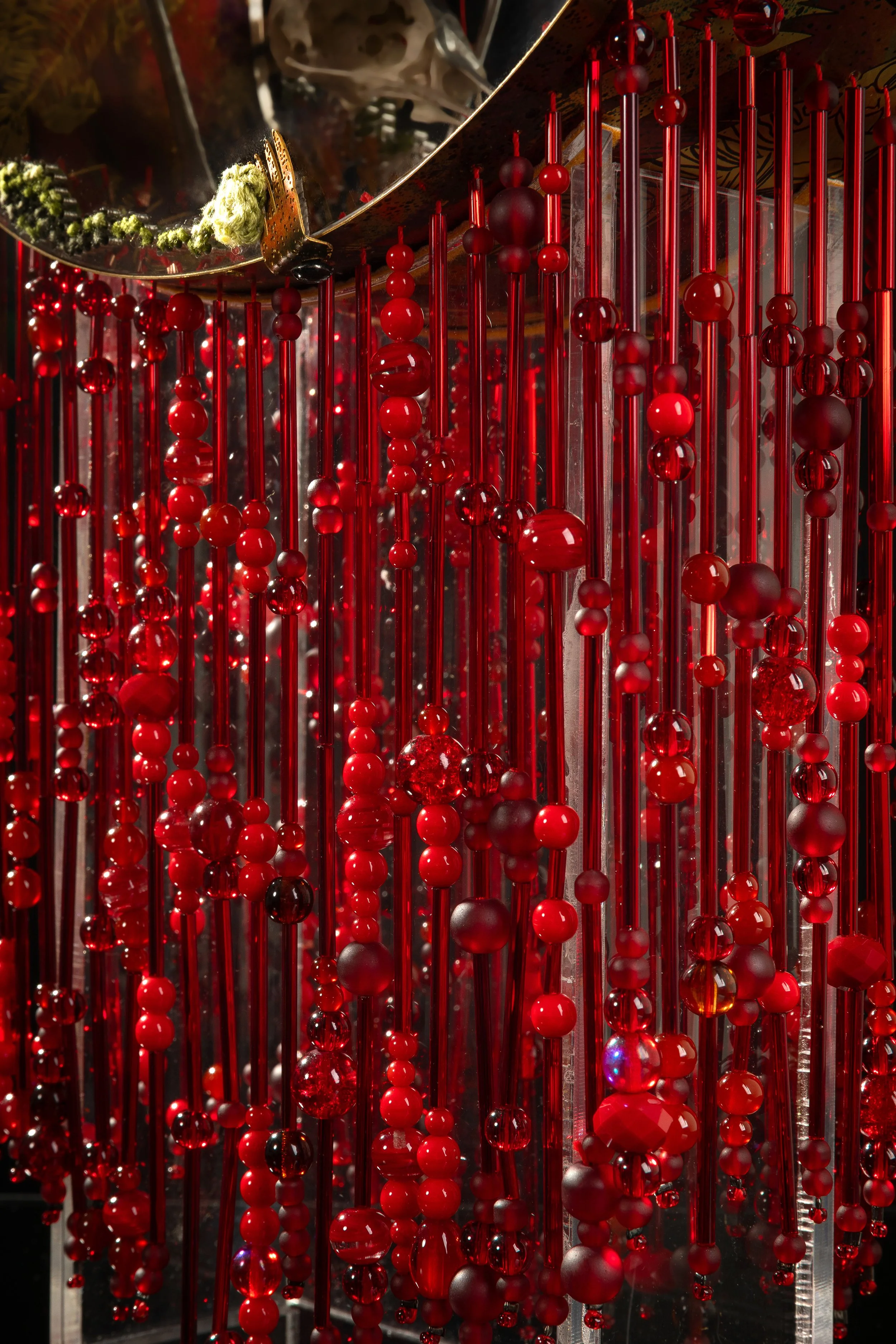
Photo: Stephen Heaton
