Meriel Whale
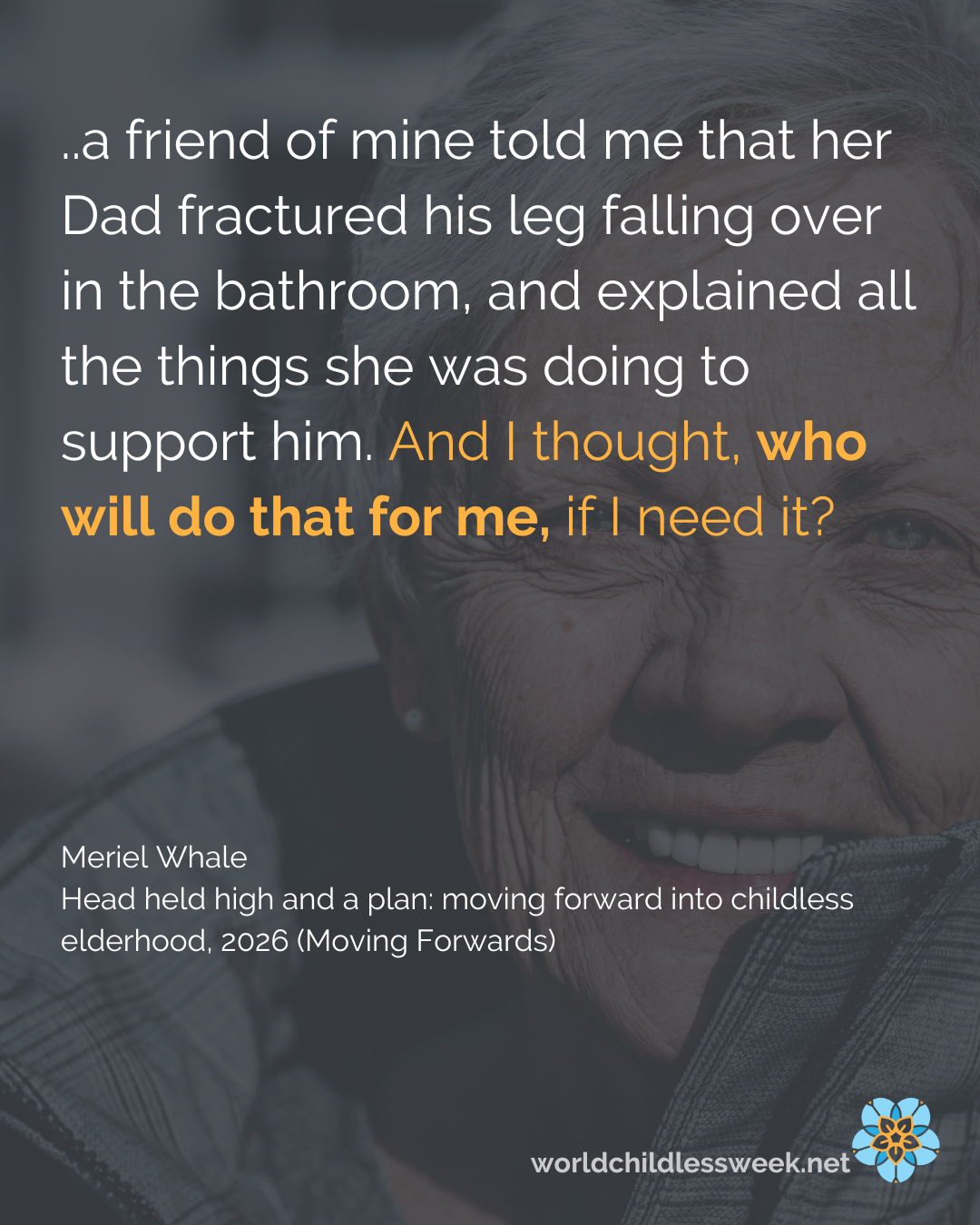
I don’t know about you, but I’ve started to think a lot about my elder years. Maybe it’s because I’m almost 54, maybe it’s because friends are finding themselves doing more and more for their aging parents and talking about it. When I say think, sometimes I mean exactly that – think, in a clear and helpful way. And sometimes I mean worry, worry about what might happen to me and who will help. For example, a friend of mine told me that her Dad fractured his leg falling over in the bathroom, and explained all the things she was doing to support him. And I thought, who will do that for me, if I need it? And I did what I have started doing recently, writing these things down so I can think about them and I can plan, plan instead of worry.
PLANNING
Planning gives me feelings of pride, power and agency. Planning means – not an end to worry, but an alternative, an alternative in which I take control of as much as I can. Planning starts with a feeling, an imagining of how I want to feel in my elder years. I want to feel strong, as if my feet are on the ground and yes, my head is held high. I want to feel resourced, with information and contacts. I want to feel in charge, respected by any professionals I encounter. I want to feel knowledgeable and able to plan my own life. I want to feel as if I deserve an elderhood that is good enough, whether I have children or not. I want to feel confident that I can manage anything that might happen. And I have hope that I will have the cognitive ability to do this, and I have hope that if I don’t, I will be treated with compassion and offered the support I need. And I plan to back that hope up with action.
DESCRIBING
The first step is to imagine and describe the things I want and need in my elder years so that others know if I lose the ability to make them happen myself. For example, I want to stay in my local area, I want to keep working and contributing, in my profession or as a volunteer, to continue to use my skills and my attributes, and to be a part of community, regularly being with others. I want to continue to learn. I want to get outside and enjoy nature. I would like a way to read, whether it is paper books, e-books or audio books, and to write if I can. I would like opportunities to enjoy the arts: theatre, music, museums and galleries. I want to continue to have meaningful connection with the people who matter most to me. I would like to be treated as if I have agency and capacity, to experience respect and choice. I want to have a good life, full of what matters. I appreciate this is a best case scenario, but I want to imagine the best case scenario, even if not all of it is possible. And I want to do this without shame or self-judgement, asserting my worth if I can, finding help and support to do that from other childless people if I can’t just yet.
PREPARING
Now, I am hoping to be the person who can make this happen myself, and hope must be backed up with action – planning, that starts now. I need to keep my body and my mind active, healthy and strong. If I fracture my leg, if I get a serious illness or develop a chronic condition, if I am affected cognitively - I want to think both about preventing that if I can, and what I will want and need if I can’t, and who will help me provide that. And I want to start saving money now and putting it in a sensible place, easily accessible when I need it, safe while I don’t. I want to ask myself questions now and think through and record the answers now, before I need to, so I am prepared, as ready as possible. If I need someone to come to appointments with me, to be available in an emergency, if I need advice, if I need someone to bring a bag to hospital…all these things can be thought about, even if I don’t have answers yet, I can reflect upon the questions, I can write them down. Not just in worry, but with my head held high, with power, practicality and self-compassion.
SUPPORT
And I can ask for help from other childless people, can talk about this together, can form networks of support, both for now and for the future. We can set up checklists of tasks we will need to do in our elder years, lists of medical professionals and organisations and social care contacts, who we can turn to for practical and emotional support (both people we know and organisations such as meal providers, home maintenance), can start a taxi fund, can research how to get bus passes, we can help each other to think of the things we may not have thought of. We can find our tribe, now and for the future. We can do the best we can and we can do it with pride.
JUST ONE THING NOW
I find that doing one thing at a time for big tasks and projects is helpful. If you feel like me, then I’d suggest one small step at a time is the perfect way to start. I’d invite you to do one thing now, just one thing, the smallest possible thing, and then, if you can, do one more after that one, then one more, then one more. Write one thing on a list, fill in one online form, message one person in the same boat as you and ask if they want to meet for coffee or an online call to talk about aging well without children. The smallest steps will empower you, the smallest of steps will give you hope, will lead to another small step and another and then there’s a plan and then things are already, immeasurably, better than before you began.
Useful links for ‘My Future Care’, physical books and online resources to help plan for our elder years:
https://profile.myfuturecare.org/who
https://myfuturecare.org/about-the-my-future-care-handbook/
https://myfuturecare.org/my-future-care-support-service/
https://myfuturecare.org/handbook-spreadsheets/
A FCA registered financial planner: https://consciousmoney.co.uk/