Stephanie Joy Phillips
I was diagnosed with ovarian cancer in 2019 and a few months ago I found out that I am legally protected in the workplace for the rest of my life because cancer is classified as a disability. It’s a strange concept to me that I am now protected in work because of cancer but my childlessness can still be ignored. I know that being childless is not the same as cancer but there are many areas in which it overlaps: fear, anxiety and depression alongside a life-long change in how the world is perceived. I’m not childless due to cancer but for many it is the cause and yet this side effect still remains hidden within the vast majority of workplaces. Cancer is met with sympathy and empathy whilst childlessness remains invisible.
After my hysterectomy I went on a course of chemotherapy and due to my veins being ‘rubbish’ it was decided I’d have a PICC line fitted. A nurse was assigned to chat to me in order to distract me from the operation and her opening question was “do you have kids”. Because I am now confident to speak openly she, and every doctor and nurse in that room was educated on my childlessness and in turn World Childless Week.
Soon after my diagnosis I joined a couple of online support groups specifically for ovarian cancer and quickly realised I didn’t see my situation reflected. So many posts in there talked about “I’m fighting this for my kids” and it made me question who I was fighting for – was it enough to fight for myself? I’d hoped for inclusion and a feeling of safety to speak openly about my worries but instead I felt like an intruder who couldn’t say anything because of my childlessness. If I dared to say I was fighting for myself would I be classed as selfish, knowing this was a label repeatedly thrown at the childless without consideration of the meaning or knowledge of our situation.
There were also conversations where people didn’t want to be a burden on their children, but equally the assumption was there that they would step up if needed and reassurance from others that their children would want to help them because of their love and ‘that’s what family do’.
The groups also welcomed family members of those diagnosed with cancer and their posts and comments reinforced the difference a child can make in supporting their parents and underlined how they would step up because “it’s my mum – I’d do anything for her”.
On a more regular basis than anyone would want to see there would be posts about a member not being as active as normal and the fear they may have passed. Sometimes the fear was a reality and an announcement would be made. On these occasions the conversation would turn to if they had family, or more specifically children. It clarified how the conversation would go if I was ever in that situation:
“Did she have kids”?
No
“Oh, that’s a blessing”
It highlighted that my life was/is less important and lower in the stakes of sadness because once again my childlessness is prominent and lowers my credibility in this world both alive and dead. I do understand that leaving children without a parent is a sadness I’d not wish on anyone but it would be nice if people saw others as equal and not less than because of their parental status.
My thoughts turned to questioning if it really matters if I died, will anybody notice? The unintentional negativity born from pronatalism hit hard and the reality of my mortality was front and centre in my mind. With thoughts of preparing for my death I was once again confronted with pronatalism as adverts intending to be supportive throw my childlessness in my face with images of happy families and headlines that show no acknowledgement of my existence:
“taking care of your children after you have gone”
“leaving your loved ones knowing they will be looked after”
All of this before trying to think about who will be the executor of my will.
During chemo I’ve had to listen to the chatter of patients and nurses that often centred on family life, watch patients being walked in and supported by their children and a nurse receiving congratulations and good luck sentiments as she left on maternity leave. I can only imagine the heightened pain of undergoing treatment that takes away your fertility and your chance to be a parent whilst listening to the same conversations and watching the care others receive from their children.
Cancer is tough and the treatments have been harsh and debilitating on my body; but the mental and emotional haul is just as taxing. When you add the invisibility of childlessness into the equation it highlights areas where pronatalism is rife and ready to knock you backwards when you already feel low.
It’s good and only right that the world carries on as normal and people see their parenthood dreams come into fruition but when you’re in any kind of club that no one wants to belong to and you still feel like an outsider it can be a lonely experience.
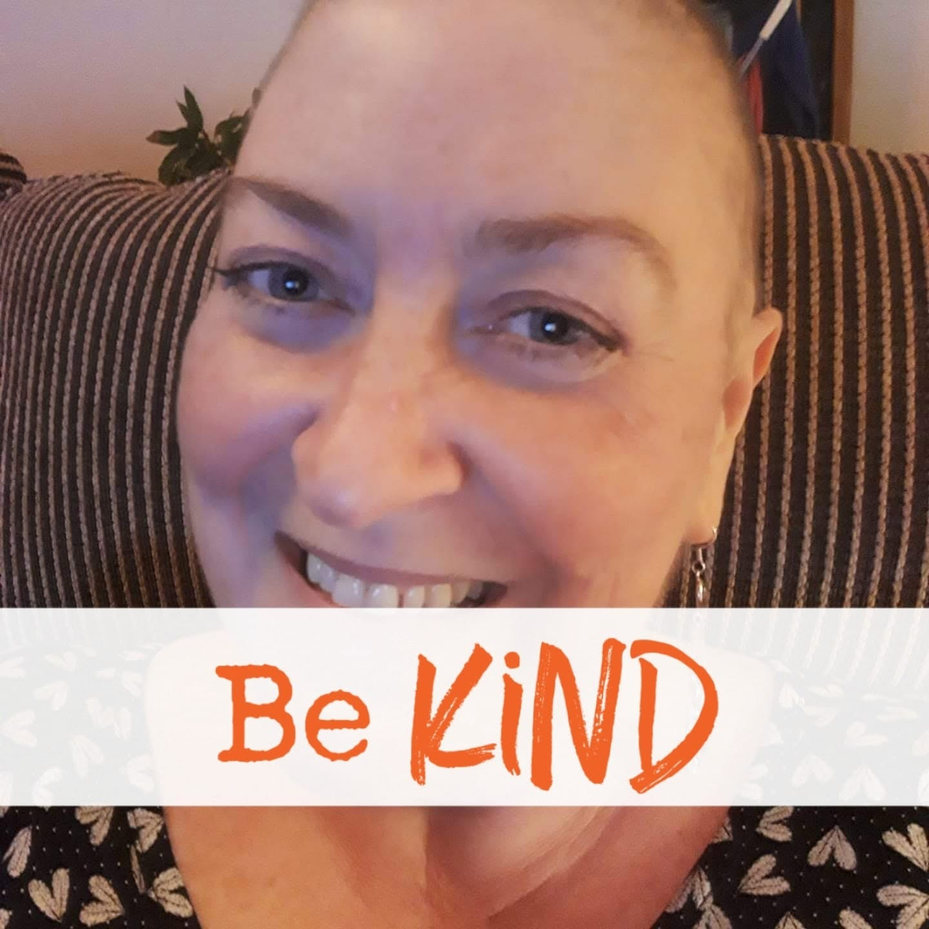
When I went looking for a photo of me at first diagnosis, it seems apt that I found one with the words “be kind”.