Sarah Roberts
Recently, I woke up with a bit a of raging UTI, (urinary tract infection). This isn’t a new experience for me, I’ve had them throughout my adult life, but this one was a bit raw. They have been more common for me post menopause.
I booked an emergency appointment at my usual medical clinic, 20 minutes, heavy traffic, but if you’ve got a raging UTI, the appointment can’t come fast enough. All went well. I knew to collect a specimen and drink heaps of water.
You know these kinds of medical appointments. 15 minutes, a few of them taken by the walk down the hallway, the Doctor head down in the computer screen flipping through your notes. A new doctor, a woman my age, compared to previous experience, her knowledge of menopause was really good. It’s lovely to see this focus on midlife women’s health.
Unlike previous visits, this Doctor took time to explain that UTIs are more common post-menopause. The drop in oestrogen means the bladder lining thins, the pelvic floor drops and the bladder can lean sideways. This means the urine can pool, the bladder might not empty properly, leaving us more susceptible to infection. Super helpful huh?
Then surprisingly, she added instruction on the best posture for urinating. She even demonstrated it for me sitting in her chair. I know, who knew there was such a thing. Legs wide apart, lean back, and wait for the second pee so the bladder empties properly. Like I said, very personal, but so helpful.
Then we went through a range of results, we laughed, we spoke like intelligent women. I relaxed and thought, this new Doctor is great.
Then, the clanger.
It began with this…
“So how many children did you have?”
Deep sigh, do I say anything? We were getting on so well. Perhaps she needs this information about possible birth trauma that might be impacting on my UTI or bladder? It’s just words isn’t it? Surely I can give her the benefit of the doubt?
How much information do I give? I’ve been coming here for years… My reproductive history is on my medical file. They referred me for some of this fertility and post-fertility care. I have many options here, which one do I choose?
Is every woman you see a mother? This feels awkward.
Often, I just suck it up and move on, doing the quiet emotional labour of absorbing the insensitive comments of others.
Surely, you’ve had other childless patients? She’s really nice but not all women have children and we deserve medical care that doesn’t trigger us. Ok, other women might be asked this, and it might hit really hard. Here we go….
“We don’t have any. We really wanted children. We spent 10 years trying to conceive, including IVF, and were not successful.”
Awkward silence
“Well, these things happen.”
More awkward silence.
Would it be ok to say that if someone had been bereaved? These things happen?
We have just entered the terrain of grief. I had 12 reproductive losses, and I’m not the first patient who is childless not by choice. Who might have experienced a significant grief and life transition.
Aren’t you just a bit curious about how I’m doing and my life now?
“It has caused a deep grief for us.”
Even more awkward silence.
I’m not going to rescue this (like I usually do). We need doctors who know about the one in five women who don’t have kids, many not by choice, and we need a better response. Does this need to be in medical training or ongoing professional development?
“So why didn’t it work?”
IVF? I’m assuming this isn’t about blame (which it often is) but a genuine medical reason. Why is my age and partner’s sperm count relevant to my UTI? Maybe it’s about possible related gynaecological issues?
I explained about unexplained infertility.
Silence.
The conversation quickly moved on to other concerns. No inquiry about how I was doing now or anything about my psychological care. To be honest, when I’d needed it and asked in the past, the psychologist referral was really inappropriate. How could I forget that mini lecture on how hard it was to be a Mum and being ghosted when I tried to offer feedback?
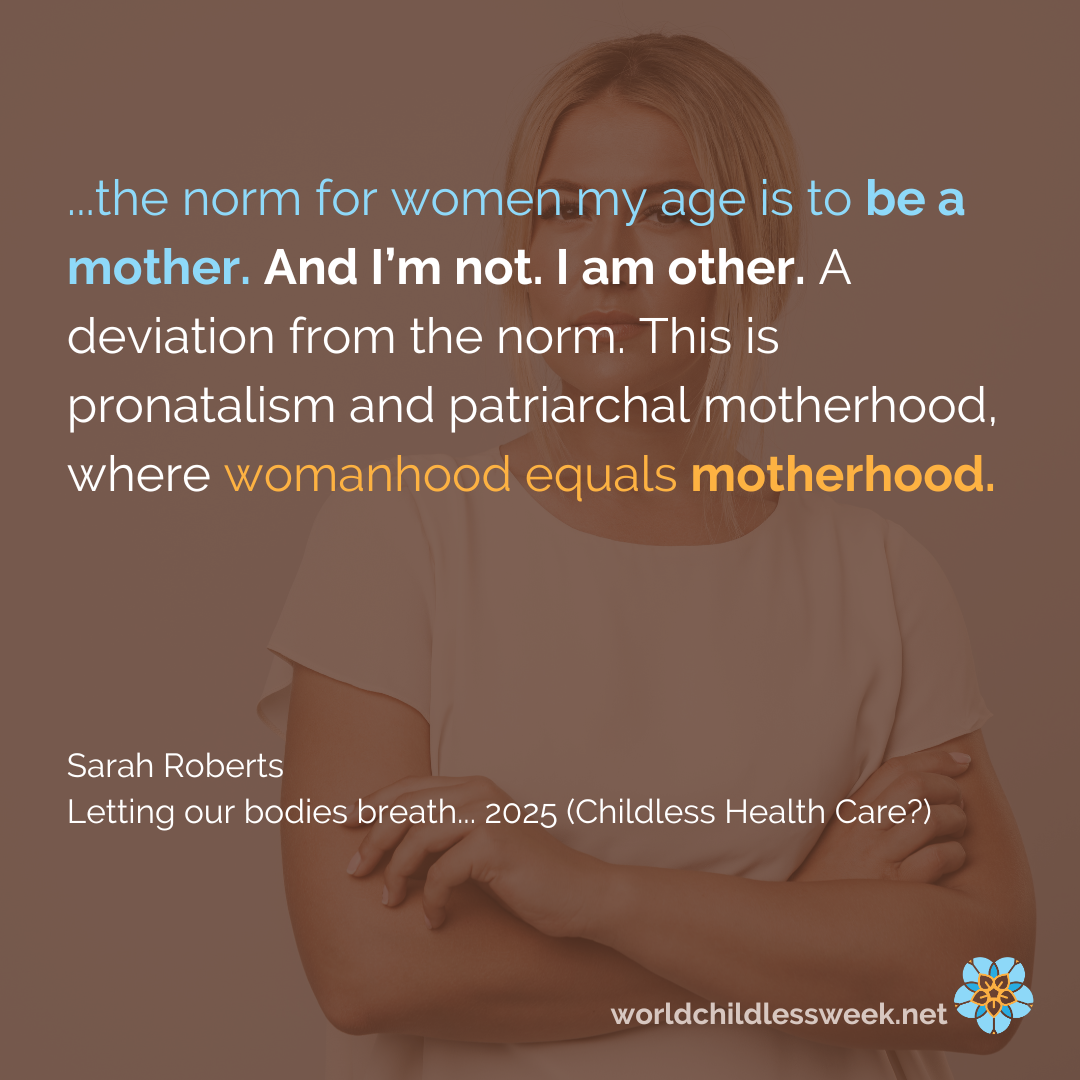
With the most generous interpretation, it was unfortunate wording that we might minimise, but this language communicated to me that the norm for women my age is to be a mother. And I’m not. I am other. A deviation from the norm. This is pronatalism and patriarchal motherhood, where womanhood equals motherhood.
I believe that most Doctors do care, are intelligent and skilled, and have the best intentions. The lack of research, information, and literacy about the needs of involuntary childless people can be a blind spot in health care delivery. Is this about a gap in knowledge, skills and training?
The research, resources and medical care available whilst we are trying to conceive and are valued as potential parents, are in contrast to the deafening silence and uncomfortable responses we receive if we are permanently childless. We are expected to just deal with it, and be ok, not bother others, or make them feel uncomfortable.
Medical care that is non-inclusive can feel othering and silencing. Another form of disenfranchisement. It keeps us silent. It can erode trust that our needs will be seen and responded to appropriately. That we will feel safe. Fortunately, for me, psychological care wasn’t needed, but I did wonder about the options if it were.
Back to the uncomfortable silences…
We went over time, and I was charged for a long appointment.
That gentle, familiar sadness followed me home